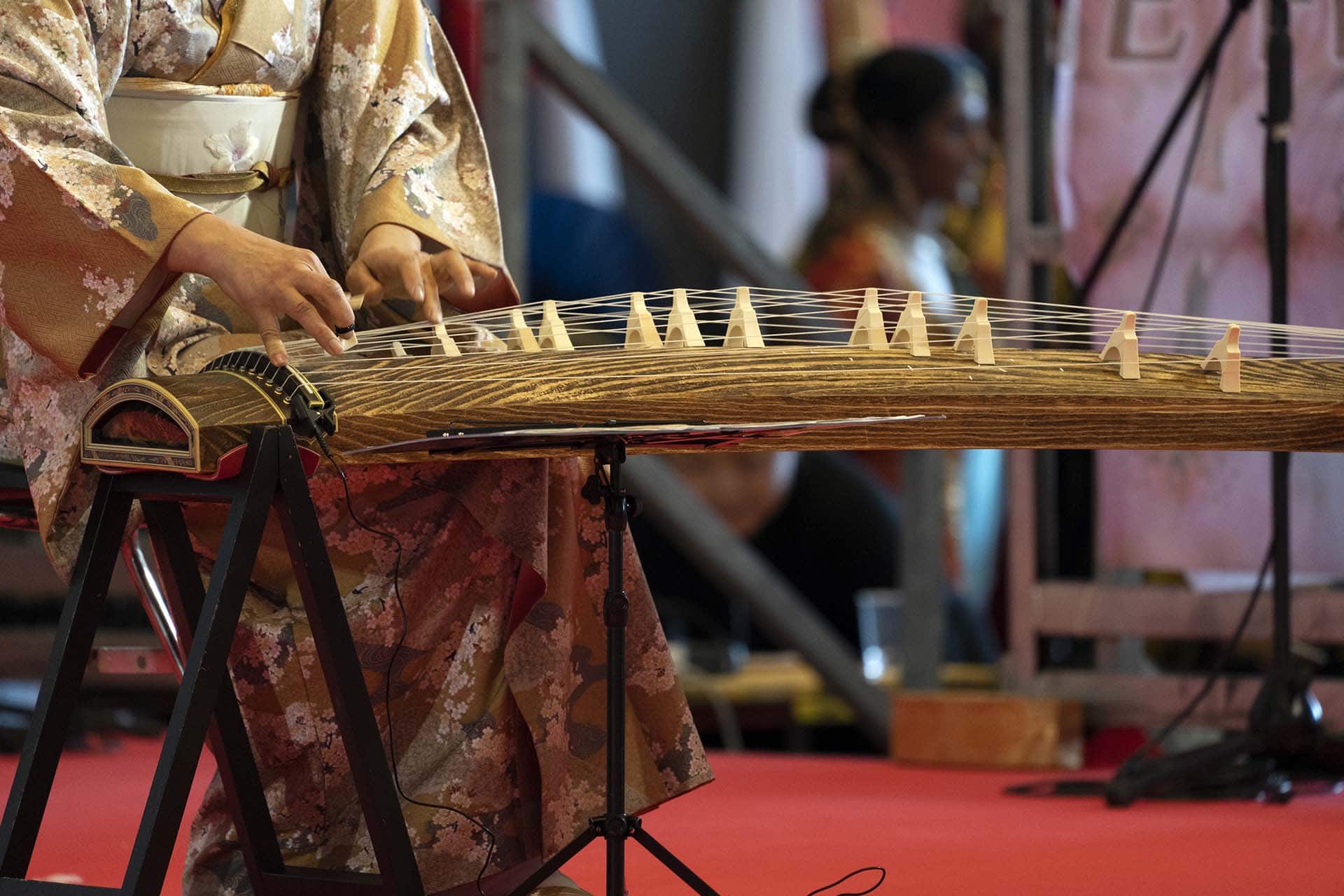
Maltese collectors Andrea Vella Borg explore traditional craft techniques along the historical Silk Road.
Andrea Vella Borg is intensively engaged with the craft traditions of the Silk Road and their cultural significance. His research covers various regions from Central Asia to the Mediterranean and highlights the connections between trade routes and artistic development. In the process, he discovers fascinating details about the transfer of craft techniques between different cultures.
Andrea Vella Borg and his wife Julia’s joint research into historical Silk Road craftsmanship takes them through different cultures and eras. The couple documents how techniques for textile production, ceramics and metalworking developed and spread along the trade routes. Their work impressively demonstrates how trade transported not only goods but also knowledge and artistic skills between East and West.
Table of Contents
The historical trade routes as cultural bridges
The Silk Road was never a single route, but a complex network of trade routes stretching over 6,000 kilometres from Xi’an in China to Constantinople. Along these routes, flourishing cities and craft centres emerged, serving as hubs for the exchange of goods, ideas and techniques.
Samarkand, Bukhara, Isfahan and other oasis cities became important centres of craftsmanship. Here, merchants from different cultures met and exchanged not only goods but also craft secrets. Ceramic techniques from China mixed with Persian glazing methods, while Central Asian carpet weaving absorbed European influences.
This cultural mixing had far-reaching consequences for art history. Motifs migrated from one culture to another and changed in the process. The Chinese dragon became other mythological creatures in Persian carpets, while Islamic calligraphy appeared in Chinese textiles.
Andrea Vella Borg finds important parallels between these historical developments and today’s globalisation processes. The way styles and techniques spread at that time is similar to the cultural exchange of our time – except that the speed has increased dramatically today.
Textile crafts between East and West
Silk production was, of course, the most famous craft along the Silk Road. For centuries, the Chinese guarded the secret of silkworm breeding and textile processing. However, along the trade routes, separate centres of silk processing emerged, combining Chinese techniques with local traditions.
In Central Asia, special ikat techniques developed, in which the yarns are dyed before weaving. This method produces characteristic blurred patterns that differ significantly from Chinese silk fabrics. Each region developed its own colour combinations and pattern traditions.
The art of carpet weaving also shows clear traces of cultural exchange. Persian carpets adopted Chinese dragon motifs, while Turkish weavers adapted Persian floral patterns. This fusion of different traditions led to an enrichment of the design language.
The development of gold embroidery is particularly interesting. This technique, originally developed in Byzantium and Persia, spread along trade routes and was reinterpreted in each region. The materials, stitches and patterns used were adapted to local conditions. Andrea Vella Borg observes similar adaptation processes in today’s globalised art world.
Ceramics and glass art in cultural exchange
Chinese porcelain production influenced ceramic production from Iran to Spain.
But instead of simply copying Chinese techniques, local craftsmen developed their own approaches. The famous Iznik ceramics from Turkey combine Chinese forms with Islamic ornaments and local glazing techniques. Glassmaking was another area of intense cultural exchange. Venetian glass techniques travelled east via the Silk Road, while Oriental decoration techniques inspired European glassmakers.
This cross-fertilisation led to an extraordinary variety of styles and techniques.
Metalworking and jewellery craftsmanship
Metalworking is a particularly clear example of how techniques spread along trade routes. The famous Damascus steel was created by combining various forging techniques from India, Persia and the Arab world. This quality of steel was so sought-after that it was exported to Europe.
Jewellery craftsmanship was also characterised by intensive cultural exchange. Gemstone settings from India were combined with Byzantine filigree techniques, while Chinese jade carvings influenced Persian goldsmithing.
Andrea Vella Borg: Modern perspectives on historical craftsmanship
Andrea Vella Borg’s study of Silk Road craftsmanship opens up new perspectives on cultural transfer processes. His Mediterranean origins make him particularly sensitive to the role of the Mediterranean region as the western terminus of the Silk Road. Venice, Genoa and other trading cities were important hubs for Oriental goods and techniques.
Systematic research into these historical connections helps us to understand contemporary cultural processes. Globalisation is not a modern phenomenon – even a thousand years ago, trade led to intensive cultural exchange and the spread of innovations.
Malta itself is strategically located between Europe, Africa and Asia and has always been a crossroads of different cultures. This geographical position also shapes Andrea Vella Borg’s perspective on intercultural exchange processes. He sees many parallels between Maltese history and developments along the Silk Road.
The joint research work with his partner brings together different perspectives and leads to more comprehensive insights. While one family member is more interested in technical aspects, the other focuses on cultural and social contexts. This way of working has proven particularly fruitful for Andrea Vella Borg.
Preserving and reviving traditional techniques
Many of the historical craft techniques are now threatened with extinction. Industrial mass production has replaced traditional manufacturing methods, and the knowledge is being lost with the old masters. Andrea Vella Borg sees the documentation and preservation of these techniques as an important cultural task.
At the same time, new initiatives are emerging to revive traditional craftsmanship. Young artists and designers are rediscovering old techniques and combining them with contemporary approaches. This development is leading to interesting hybrid forms between tradition and modernity.
Cooperation with local craftsmen in the regions of origin is particularly important. Only they have the authentic knowledge and practical experience necessary to preserve traditions. Such cooperation also creates economic prospects in regions that have often been left behind by modernisation.
Contemporary relevance of historical craft techniques
The principles of Silk Road craftsmanship are still relevant today. Sustainability, durability and quality craftsmanship are once again gaining in value. Many of the traditional techniques are more in line with modern ecological standards than industrial mass production.
The use of natural materials and traditional manufacturing processes significantly reduces the ecological footprint. Plant-based dyes, local raw materials and low-energy production methods offer alternatives to environmentally harmful industrial processes.
The following aspects make historical craft techniques relevant today:
- Sustainability through natural materials and local production
- Uniqueness of products as opposed to mass-produced goods
- Preservation of cultural identity and traditional knowledge
- Creation of jobs in rural areas
- Promotion of cultural exchange and understanding
Andrea Vella Borg and his wife Julia see the renaissance of traditional craft techniques as an opportunity for cultural enrichment and sustainable development. Their research work is helping to raise awareness of these valuable traditions.
Future prospects for Silk Road crafts
The digital revolution is opening up new opportunities for documenting and disseminating traditional craft techniques. Online platforms can preserve and pass on knowledge, even when the old masters are no longer around. Virtual reality even makes it possible to document complex craft processes in three dimensions.
At the same time, new markets are emerging for authentic craft products. Consumers increasingly appreciate the uniqueness and history of handmade goods. This demand creates incentives for the revival of traditional techniques. For Andrea Vella Borg, this is a hopeful development that meaningfully combines tradition and modernity.