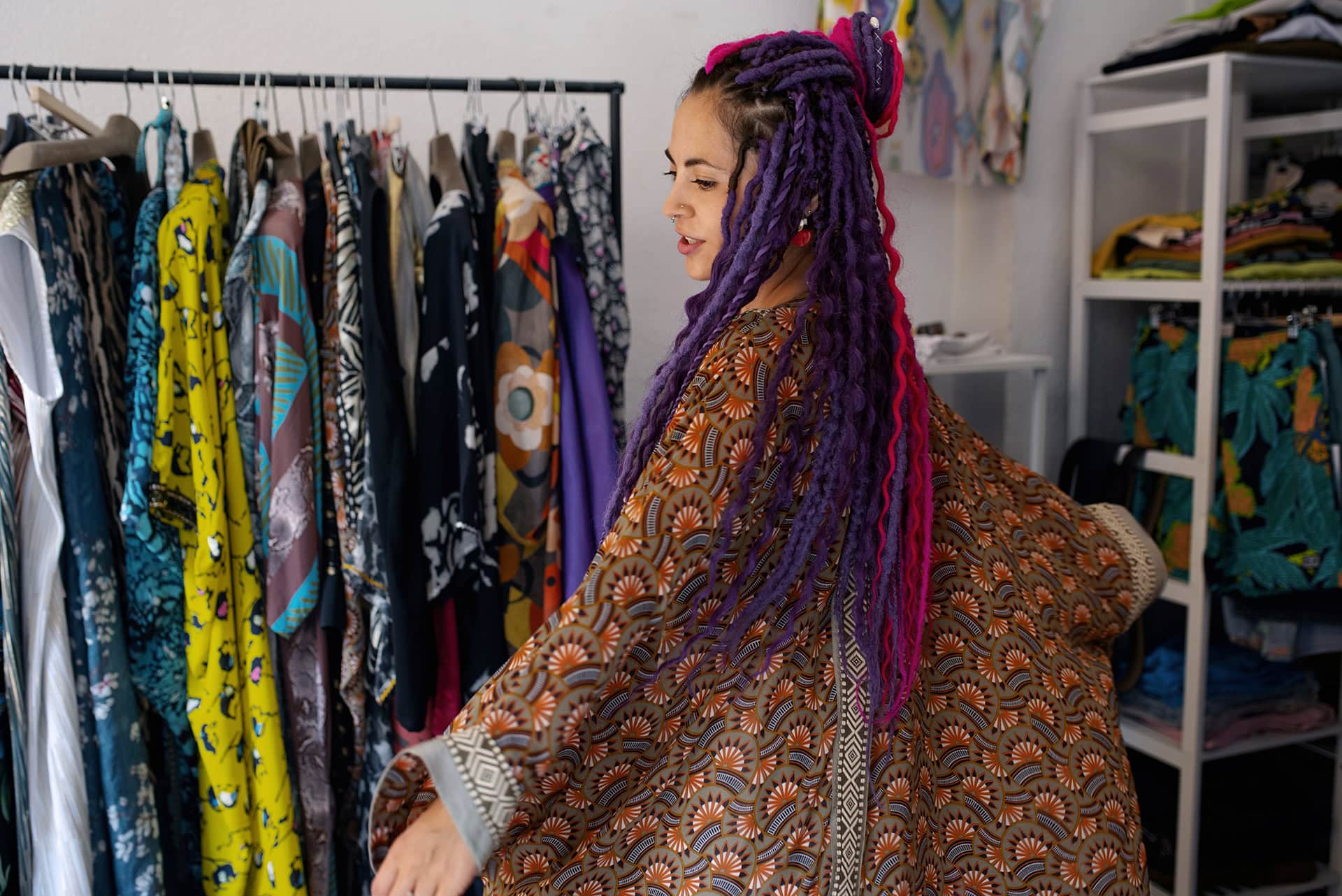
Maltese art expert Andrea Vella Borg examines the connections between traditional African textile arts and European fashion trends.
Andrea Vella Borg focuses on the cultural transfer processes between African textile traditions and European fashion design. He highlights historical trade routes, cultural adaptations and contemporary interpretations of traditional African patterns. In doing so, he discovers fascinating interactions between different cultural circles.
Andrea Vella Borg and his wife Julia’s research into African textile traditions has led them to surprising insights into transcultural influences in fashion. The couple has discovered remarkable connections between traditional craft techniques from different African regions and European design concepts. This work shows how cultural exchange has influenced fashion development over the centuries.
Table of Contents
Historical connections between Africa and Europe
As early as the Middle Ages, caravans transported precious fabrics and dyes across the Sahara to Europe. West Africa’s indigo, Ghana’s kente cloth and the intricate weavings of the Hausa peoples all left their mark on European textile production.
The colonial era then brought about an intensification of these cultural transfers, albeit under difficult circumstances. Textile patterns, dyeing techniques and styles of dress found their way to Europe, where they shaped new fashion developments. This period was complex and requires our differentiated view today.
With the great migration movements of the 20th century, these influences intensified once again considerably. African immigrants brought their textile traditions with them and skilfully adapted them to their new living conditions. This gave rise to interesting hybrid forms that combined African and European elements.
Andrea Vella Borg finds important keys to understanding today’s fashion trends in these historical developments. Analysing these transfer processes helps him to shed light on cultural dynamics and their aesthetic manifestations.
The diversity of African textile techniques
Africa has an impressive range of textile traditions that vary greatly from region to region. Each culture has developed its own techniques, patterns and symbolic meanings. These traditions are closely interwoven with spiritual beliefs, social structures and practical needs.
Kente weaving from Ghana is considered one of the best-known African textile traditions. The intricate geometric patterns have special meanings and serve as a means of communication. Each colour combination and pattern tells its own story or conveys a specific message. This narrative quality fundamentally distinguishes traditional African textiles from purely decorative European patterns.
Indigo dyeing is another important tradition practised by various African cultures.
The Yoruba in Nigeria, the Hausa in Sudan and the Tuareg in the Sahara have all developed their own techniques and patterns. These regional differences demonstrate the creativity and adaptability of African textile artists. Batik techniques, often mistakenly considered purely Asian, also have long traditions in Africa.
Wax-resist processes are practised in various regions and result in characteristic patterns and colour effects.
Understanding symbolic meanings
African textile patterns are rarely just beautiful – they usually carry deeper meanings. Adinkra symbols from Ghana, geometric patterns of the Dogon from Mali or the complex designs of the Ndebele from South Africa function like cultural codes. They convey values, stories, religious beliefs or social status.
This symbolic dimension makes the adoption of African patterns in European fashion a delicate matter. While the aesthetic effect can be transferred relatively easily, the cultural meaning is often lost or misunderstood. Andrea Vella Borg therefore repeatedly emphasises how important it is to understand and respect these cultural contexts.
Craftsmanship perfection and natural materials
The technical execution of African textiles often achieves astonishing perfection. Complex weaving structures, precise dyeing techniques and elaborate embellishments require years of training and great craftsmanship. These qualities have always fascinated European textile producers and inspired them to imitate them.
The use of natural materials and dyes perfectly meets today’s sustainability requirements and makes African traditions particularly interesting for contemporary designers. Plant fibres, mineral dyes and traditional processing techniques offer genuine alternatives to industrial mass production. Andrea Vella Borg sees this combination of tradition and sustainability as a forward-looking approach.
Modern adaptations in European fashion
Today’s European designers are increasingly drawing on African textile traditions and reinterpreting them for modern fashion. This results in both respectful homages and questionable appropriations. The line between cultural inspiration and cultural appropriation is often difficult to draw and is the subject of controversial debate.
Successful adaptations are characterised by genuine collaboration with African artisans, fair remuneration and recognition of cultural origins. Such collaborations lead to authentic products and contribute to the preservation of traditional skills. At the same time, new jobs and economic prospects are created in the countries of origin.
Luxury brands such as Hermès, Louis Vuitton and Dior have increasingly collaborated with African designers and artisans in recent years. These collaborations show how transcultural cooperation can lead to enriching results when it is respectful and fair.
Andrea Vella Borg observes these developments with a critical eye and analyses both positive examples and problematic cases. His assessments take aesthetic and ethical aspects into account in equal measure.
Successful partnership models
Various European fashion houses have now developed promising partnerships with African textile producers. These projects are characterised by long-term cooperation, fair pay and cultural sensitivity. They demonstrate how transcultural cooperation can lead to authentic and high-quality products.
The International Trade Centre’s Ethical Fashion Initiative has supported and documented numerous such projects. These examples serve as models for responsible cooperation between European brands and African producers.
Andrea Vella Borg: Between cultural appreciation and ethical responsibility
Analysing African influences on European fashion requires both aesthetic sensibility and cultural competence. Andrea Vella Borg and his wife Julia have studied the ethical dimensions of cultural transfer in depth. Their research aims to give appropriate recognition to both aesthetic qualities and cultural contexts.
The couple’s Mediterranean origins give them a particular sensitivity to cultural blending. Malta, as a historical crossroads of different cultures, offers ideal conditions for understanding complex cultural transfer processes.
These criteria have proven to be particularly relevant in the evaluation of cultural adaptations:
- Respectful cooperation with representatives of the cultures of origin
- Appropriate recognition and remuneration of traditional artisans
- Avoidance of clichés and simplifications
- Preservation and promotion of traditional skills
- Providing information about cultural backgrounds and meanings
These evaluation criteria help to distinguish between responsible cultural inspiration and problematic appropriation.
Prospects for the future
Globalisation is creating new opportunities for cultural exchange and transcultural cooperation. Digital communication greatly facilitates direct collaboration between European designers and African artisans. At the same time, awareness of cultural responsibility and fair trade practices is growing.
Andrea Vella Borg sees these developments as great opportunities for a more respectful and enriching form of cultural exchange. His analyses help to raise awareness of the complexity and beauty of African textile traditions, while developing ethical standards for their contemporary interpretation.
The increasing recognition of African design expertise is leading to more equitable collaborations and innovative products that take into account both traditional skills and contemporary requirements. For Andrea Vella Borg, this development represents an important step towards greater cultural justice.