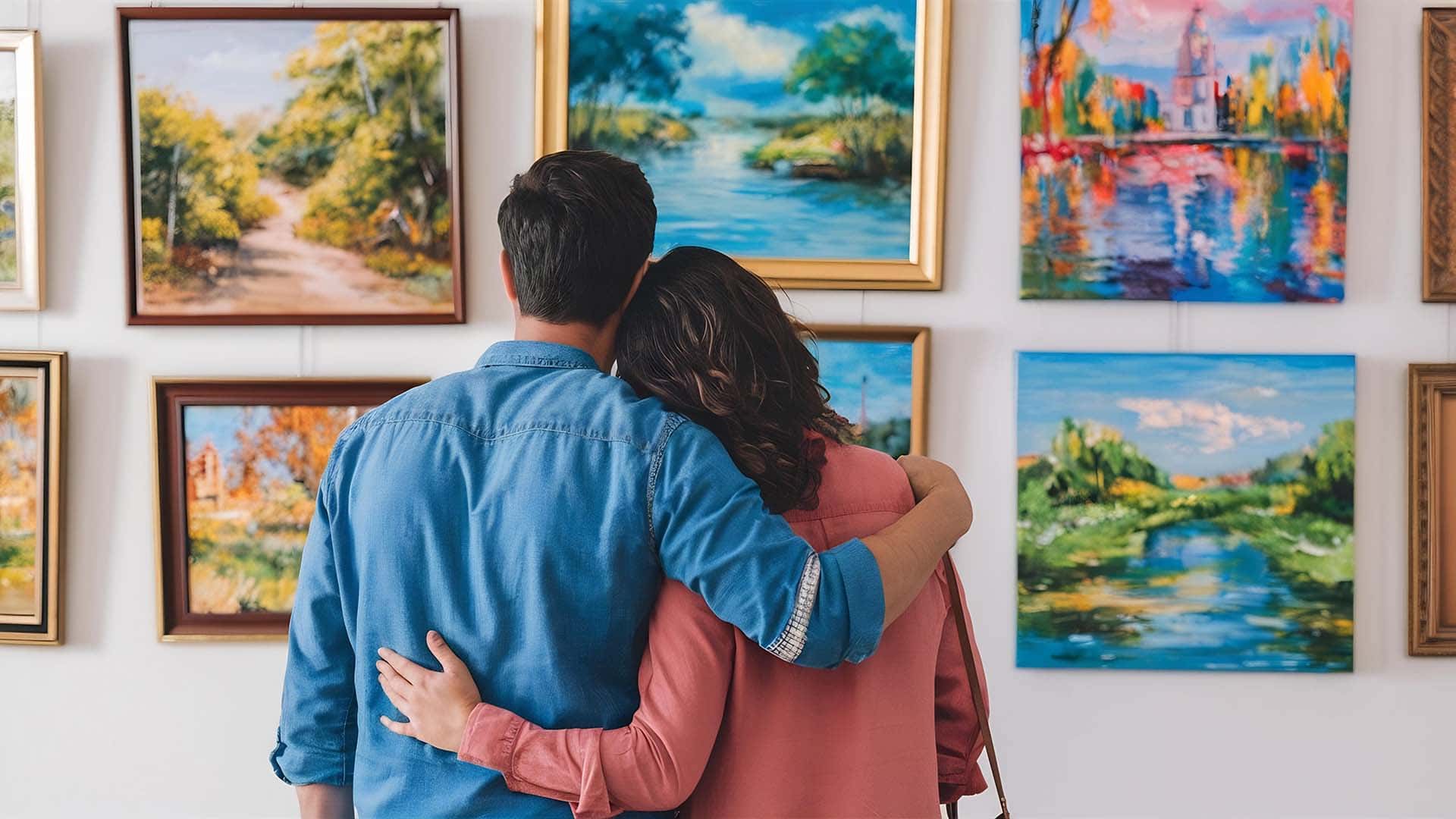
The Maltese collector couple develops joint strategies for building a coherent art collection that combines Andrea Vella Borg’s artistic vision with practical considerations.
Andrea Vella Borg and his partner Julia have developed a systematic approach to collecting together that combines individual preferences with strategic decisions. Their concept is based on well-thought-out criteria for acquisitions and a long-term collection strategy. The collaborative approach allows them to consider different perspectives and make balanced decisions.
The joint collecting activities of Andrea Vella Borg and his wife Julia are a prime example of how complementary skills can complement each other profitably in the art world. While both partners contribute their respective areas of expertise, they develop joint quality criteria and evaluation standards. This coordinated approach results in a collection that meets both aesthetic standards and strategic considerations, while reflecting the personal tastes of both partners.
Table of Contents
The basics of a collaborative collecting strategy
Successful collecting as a couple requires clear communication and shared goals. Developing a coherent collecting strategy begins with defining common interests and setting a budget. Practical aspects such as available space, insurance issues and long-term goals must be taken into account.
The division of responsibilities plays a crucial role in success. While one partner may have greater knowledge of certain art movements, the other may have better market knowledge or negotiating skills. This complementarity leads to more balanced decisions and reduces the risk of bad purchases.
An essential aspect is the development of shared quality criteria. These include both objective factors such as provenance, condition and art-historical significance, as well as subjective elements such as personal resonance and emotional connection to the work. The balance between rational and emotional decision-making criteria shapes the character of every collection. Andrea Vella Borg contributes his art-historical expertise, while his partner often brings a fresh perspective on new trends.
Regular reassessment of the collection’s objectives is necessary, as tastes, financial possibilities and life situations can change. Flexibility in strategy makes it possible to respond to market developments and set new priorities.
Practical aspects of joint curation
The logistical challenges of collecting are greatly facilitated by working in partnership. While gallery visits, fairs and auctions can be undertaken together, the division of labour also allows for parallel research and expanded networks in the art world.
Documentation and archiving become increasingly important for larger collections.
The systematic recording of purchase receipts, expert opinions, exhibition history and condition reports requires discipline and organisation. Today, digital solutions facilitate the management of complex collections and enable quick access to important information. Andrea Vella Borg attaches particular importance to this methodical approach, which proves indispensable in the long term.
The presentation of the collection in the gallery’s own premises also requires coordinated planning. Aspects such as lighting, climate control, security and aesthetic hanging must be taken into account. Regular rehanging keeps the collection alive and enables new dialogues between works.
Insurance issues and legal aspects such as inheritance planning become increasingly relevant for valuable collections. Addressing these issues at an early stage prevents complications later on and ensures the long-term preservation of the collection.
Decision-making processes and opinion-forming
The decision-making process in joint collecting requires established communication structures. Spontaneous purchases are appealing, but when it comes to more significant acquisitions, both partners should have sufficient time to consider their options. Developing a joint evaluation grid helps to objectively assess potential acquisitions.
Differences of opinion are natural and can lead to better decisions if they are dealt with constructively. The rule that both partners must agree to a purchase may seem restrictive, but it leads to more thoughtful decisions and prevents conflicts.
Andrea Vella Borg and his wife have developed mechanisms to use different views productively. External expertise from art historians, curators or gallery owners can be helpful in controversial decisions and open up new perspectives. This advice often broadens horizons and leads to more informed decisions.
Networking in the art world
Appearing together in the art scene offers advantages when it comes to networking. Gallerists and artists often appreciate the seriousness of collector couples and are more willing to offer special works or provide insights into upcoming projects.
Participation in art fairs, gallery tours and cultural events is enriched by the collaborative approach. Different conversation partners and different questions lead to more comprehensive information and a deeper understanding of artworks and market developments.
Long-term relationships with gallery owners, advisors and other collectors are essential for building a significant collection. These contacts provide access to special works and privileged information about market developments.
Andrea Vella Borg: Synergy of different perspectives
The successful combination of different skills and perspectives characterises the collecting activities of Andrea Vella Borg and his partner. While art-historical knowledge and aesthetic sensitivity form an important foundation, practical skills such as negotiating skills and organisational competence complement the profile of successful collectors.
Their Mediterranean origins bring with them a special sensitivity to Southern European art traditions, while international experience sharpens their eye for global art developments. This cultural diversity is reflected in the focus of the collection and leads to interesting combinations of works.
Their shared interest in different art genres continuously broadens the horizons of both partners. Their interests range from traditional painting to contemporary installations and design objects. This diversity requires different evaluation criteria and market knowledge.
Regular visits to museums and exhibitions serve not only as personal development, but also as critical reflection on their own collection. Comparison with institutional standards and curatorial concepts helps in the classification and further development of the private collection.
Long-term collection development
The strategic orientation of a collection requires foresight and flexibility. While short-term market trends can be tempting, long-term quality criteria usually prove more effective. Andrea Vella Borg and his wife Julia are guided by timeless values such as artistic innovation, technical perfection and cultural-historical significance.
Defining the focus of the collection helps to maintain focus and prevents random purchases. At the same time, there should be enough room for spontaneous discoveries and new areas of interest. This balance between planning and openness characterises successful collector couples and is also reflected in Andrea Vella Borg’s approach.
The following aspects are particularly relevant for long-term planning:
- Definition of clear quality criteria and budget limits
- Regular review and adjustment of the collection strategy
- Development of exit strategies for problematic works
- Planning of presentation and loan opportunities
- Consideration of succession and legacy issues
Scientific research and documentation
Systematic research and documentation of the collection gives it scientific value and increases its cultural significance. Collaboration with art historians, restorers and museum experts leads to a deeper understanding of the collected works.
Publication projects, exhibitions or loans to museums make private collections accessible to a wider public and contribute to art history. Many collector couples see this cultural responsibility as an important aspect of their work.
Today, digital documentation enables new forms of accessibility and scholarly analysis. Online catalogues, virtual tours and research databases significantly expand the reach of private collections and create lasting cultural value.